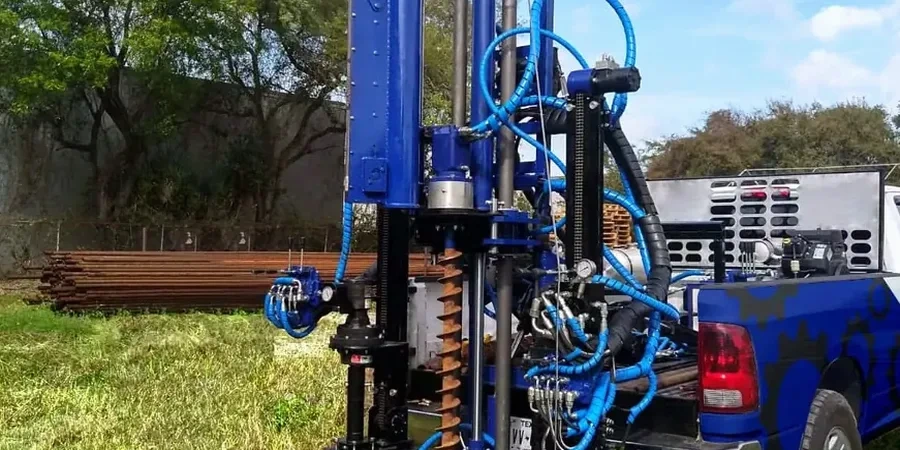
A four-storey apartment project on Maunu Road ran into trouble when weathered basalt refused to yield to a DCP. We mobilised the SPT rig the next morning. Whangarei’s volcanic geology, cut through with harbour alluvium and pockets of soft clay near the Hatea River, demands testing that captures real disturbance and resistance profiles. The Standard Penetration Test does exactly that. Our crew works from Onerahi to Kamo, dropping the 63.5 kg hammer in strict accordance with NZGS guidelines, logging blow counts every 150 mm. That N-value becomes the spine of the geotechnical report—feeding directly into shallow footing design when rock is deep, and highlighting where deeper pile foundations become the safer option. With a subtropical climate averaging 1300 mm of rainfall annually, understanding seasonal groundwater influence on SPT results is critical for long-term foundation performance.
SPT refusal on Whangarei basalt at 3 metres is not uncommon—design must pivot fast, and that decision hangs on the blow count log.
Local geotechnical context
The contrast between sites near Port Whangarei and those up on Tikipunga’s volcanic plateau is stark. Near the harbour, loose estuarine silts and sands can exhibit N-values below 8 in the upper 5 metres—classic liquefiable material under seismic demand from the Wairoa North fault. Up on the plateau, we often hit N>50 refusal at shallow depth in fractured basalt, but isolated pockets of halloysite clay can go unnoticed without an SPT that brings a sample to the surface. The biggest risk is assuming uniformity. A building consent application that lacks site-specific SPT data risks an RFI from Whangarei District Council, especially for structures requiring specific design under NZS 1170.5 seismic provisions. Where N-values drop suddenly at depth, we pair the SPT log with CPT testing to resolve the transition zone with continuous cone resistance, giving the structural engineer a complete ground model rather than a single data point.
Questions and answers
What depth do you typically drill for SPT in Whangarei?
Most residential and low-rise commercial investigations reach 10 to 15 metres below ground level. For sites on the volcanic plateau where rock is shallow, boreholes may terminate at refusal around 4 to 6 metres. Larger structures near the harbour often require 20-metre boreholes to assess liquefiable layers.
How much does an SPT borehole cost in Whangarei?
SPT boreholes typically range from NZ$960 to NZ$1,390 per borehole depending on depth, access conditions, and whether laboratory testing of samples is included. Mobilisation within the Whangarei urban area is covered, with adjusted rates for sites further out toward Hikurangi or the coast.
Is SPT data sufficient for a building consent application?
For most structures, yes—provided the SPT log is accompanied by a geotechnical report that interprets N-values for bearing capacity, settlement, and liquefaction. Whangarei District Council accepts SPT-based reports when prepared by a chartered professional engineer. Complex sites on soft harbour sediments may also need CPT data to supplement the SPT profile.
How do you handle SPT refusal on volcanic rock?
When the blow count exceeds 50 for 150 mm penetration, we log it as refusal and terminate the SPT interval. The drill string then advances through the rock with a core barrel or tricone bit to confirm lithology. If shallow refusal occurs, we recommend switching to a plate load test on the rock surface to obtain bearing capacity directly.