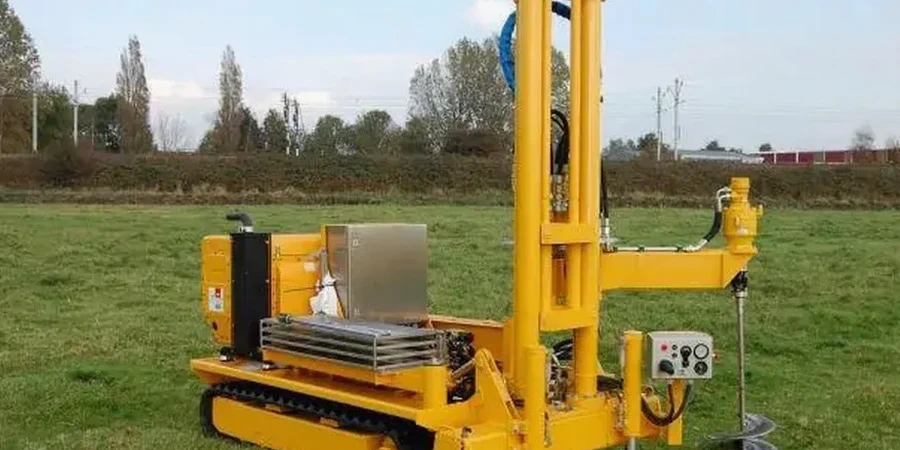
In Whangarei, we see this all the time: a site looks straightforward from the surface, but the underlying profile tells a completely different story. The volcanic and sedimentary formations around the city basin, combined with weathered greywacke on the slopes toward Parihaka, create soil transitions that standard drilling alone struggles to resolve. A CPT test lets us read those transitions almost like a continuous log, catching thin soft layers that a split-spoon sampler might miss entirely. For engineers working on foundations near the Hatea River or commercial builds in the Town Basin, we pair this data with a seismic microzonation study when liquefaction potential needs quantifying. Our rig operates across Whangarei, from Kamo to Onerahi, and we run the cone to refusal in most competent materials, giving you a clean profile for design.
A single CPT sounding in Whangarei basin alluvium often reveals more stratigraphic detail than three adjacent SPT boreholes.
Local geotechnical context
Whangarei sits at about 35°44'S latitude with a subtropical climate that delivers over 1,300 mm of rain annually, and that moisture regime directly affects cone data interpretation. Saturated volcanic soils near the airport flats can generate excess pore pressure during CPT pushing, artificially reducing measured tip resistance if the push rate isn't tight. In our experience, the biggest risk we mitigate is misclassifying a sensitive clay layer as competent — a mistake that has led to bearing capacity failures in the Whangarei area before. Liquefaction-prone silts mapped by the Northland Regional Council require careful u2 monitoring during the test; a negative pore pressure response during penetration signals dense, dilative behavior, while positive buildup indicates a contractive, potentially liquefiable material. We incorporate these readings into post-earthquake settlement analyses, applying Seed & Idriss cyclic stress ratio methods adapted to the NZGS-MBIE framework. Skipping the dissipation phase means losing the very parameter that governs time-rate settlement.
Questions and answers
How much does a CPT test cost for a residential site in Whangarei?
For a standard single-family residential lot in Whangarei, a CPT sounding with pore pressure measurement typically runs between NZ$280 and NZ$450 per location, depending on depth to refusal and whether dissipation tests are required. Sites with difficult access, such as steep sections in Parihaka, may involve a small mobilization surcharge. We provide a fixed-price quote after reviewing the address and the engineer's scope.
What depth can you reach with CPT in Whangarei soils?
In the alluvial deposits of the Whangarei basin, we routinely reach 20 to 25 meters before encountering refusal. On the volcanic rock slopes, refusal often occurs at shallower depths — sometimes 5 to 8 meters where basalt flows are near the surface. We push until the cone tip stress exceeds 20 MPa or sleeve friction indicates competent rock, whichever comes first.
Do you need to bring water for CPT operations?
No, our CPT rig is self-contained and does not require external water supply. The push system is hydraulic and the cone saturation fluid is prepared in our Whangarei workshop before mobilization. This keeps the operation clean on tight residential sites and avoids issues with water availability in rural locations like Glenbervie.
How does CPT compare to borehole drilling for a Whangarei project?
CPT provides a continuous, high-resolution profile of soil behavior, whereas SPT from boreholes gives data at 1.5-meter intervals. In Whangarei's interlayered alluvial and volcanic soils, thin soft seams between stiffer layers are often invisible to SPT but clearly registered by the cone. However, CPT cannot retrieve soil samples, so we often recommend a combined approach: CPT to map the stratigraphy and a single borehole or test pit to recover material for laboratory classification and strength testing.