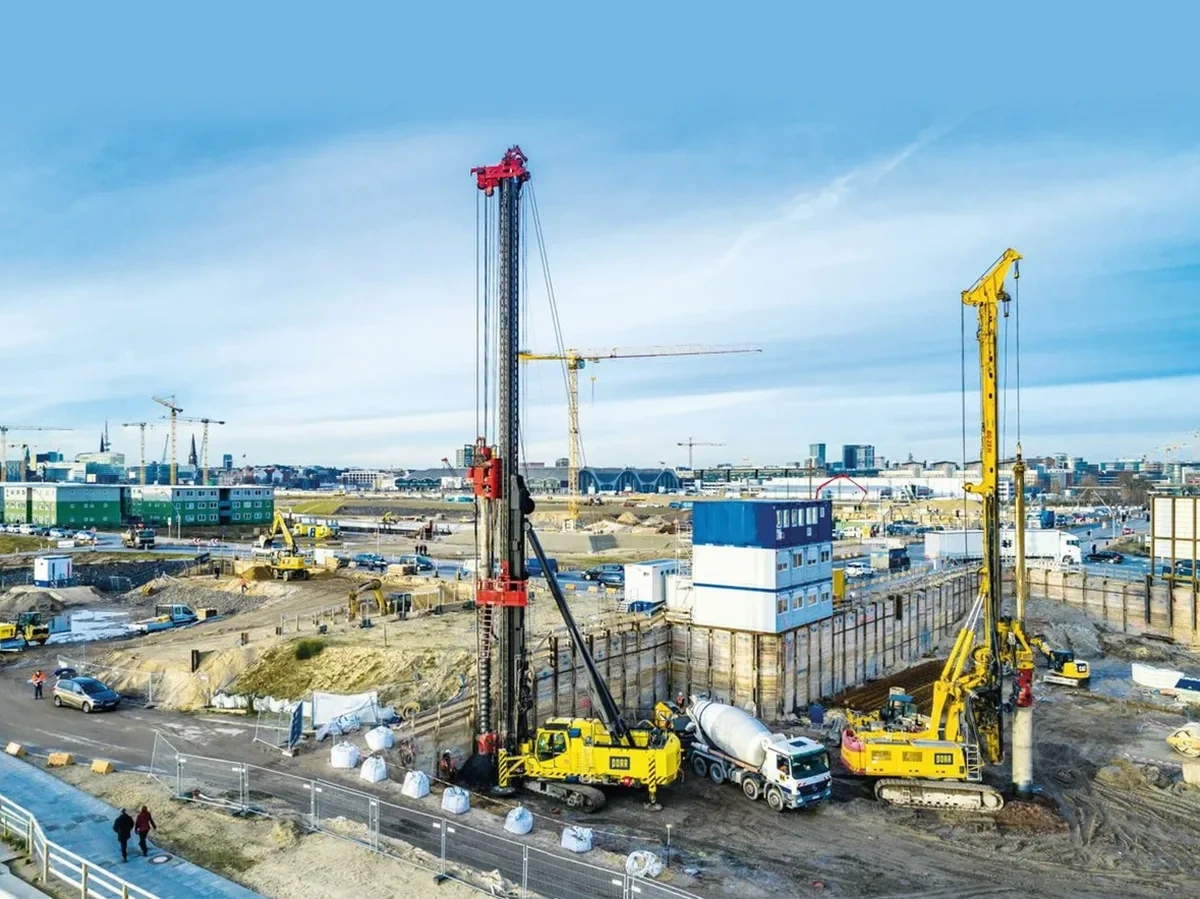
The most consistent error we see in Whangarei builds is treating a gently sloping site as uniform ground. A contractor takes a single bore log from the high corner, assumes competent rock at three metres across the entire footprint, and drives piles to a fixed depth. Six months later the downhill corner shows differential settlement because the weathered basalt transitioned into compressible alluvium halfway across the pad. Whangarei's geology simply doesn't work in neat horizontal layers. Volcanic flows interleave with estuarine silts and peat lenses across short distances, making fixed-depth pile schedules a gamble. Our team applies site-specific test pits to map the overburden profile and spt drilling to quantify bearing resistance at each pile location before a single design sketch leaves the office. A pile foundation designed for the actual stratigraphy eliminates the rebuild risk that haunts under-investigated projects.
A pile foundation is only as reliable as the ground model that informs it—and in Whangarei's volcanic landscape, averaging subsurface data across a site is a direct path to differential settlement.
Regulatory framework
NZS 3404:1997 Steel Structures (pile material and connection design), NZS 4203:1992 General Structural Design and Loading (superseded by AS/NZS 1170 series for new designs), NZS 4404:2010 Land Development and Subdivision Infrastructure, NZS 1170.5:2004 Structural Design Actions – Earthquake Actions, NZGS Soil and Rock Description Guidelines, NZTA Bridge Manual (for infrastructure pile foundations)
Questions and answers
What type of pile system works best in Whangarei's volcanic geology?
It depends entirely on the depth to competent rock at each column location. Where basalt bedrock is shallow—within three to five metres—driven steel H-piles offer speed and reliable end-bearing. In areas with deeper weathering profiles or buried alluvial channels, bored cast-in-place piles allow socketing into rock below the soft zone. Screw piles can be effective for lightly loaded structures on sloping sites where access for larger rigs is limited, but their capacity in Whangarei's residual clays requires careful verification through torque-to-capacity correlations calibrated to local experience.
How does the consenting process work for pile foundations in Whangarei?
The Whangarei District Council requires a geotechnical report as part of the building consent application for any pile-supported structure. This report must include the investigation methodology, ground model, pile capacity calculations, and a statement of compliance with NZS 3404 and the relevant loading standards. Council may request peer review if the site falls within a mapped hazard area. We prepare documentation that anticipates the questions council engineers typically raise, which helps keep the consent review within the standard twenty-working-day timeframe.
What does pile foundation design typically cost for a residential project in Whangarei?
For a standard single-dwelling residential project on a moderate slope, pile foundation design including geotechnical investigation, analysis, and construction-ready drawings generally ranges from NZ$3,050 to NZ$9,460. The spread depends on the number of boreholes required, the complexity of the ground conditions, and whether dynamic pile testing is specified. A multi-storey apartment or commercial building with deeper piles and more extensive investigation will fall toward the upper end or beyond that range.
Do I need a separate geotechnical engineer and structural engineer for pile design?
The reference range for this service in Whangarei is NZ$3.050 - NZ$9.460. The final price depends on the project scope and volume.