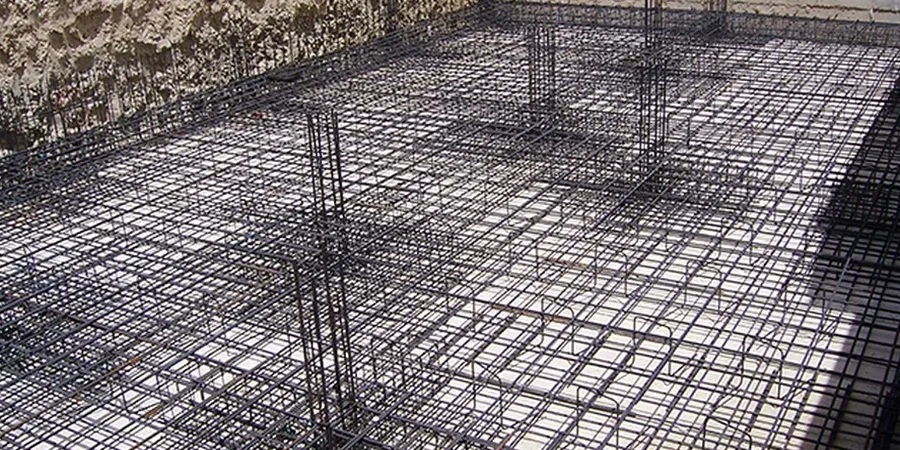
In Whangarei, we often see site investigations that underestimate just how quickly ground conditions change across a single lot. A borehole on one corner might hit firm basalt at two metres, while thirty metres away the drill encounters compressible alluvium extending past five metres. With the city's subtropical climate delivering over 1,300 mm of rain annually and a shallow water table across much of the Kamo and Onerahi districts, differential settlement becomes a real structural threat. A raft foundation design distributes building loads across a continuous reinforced concrete slab, bypassing the risk of isolated footings settling unevenly. When we combine detailed CPT testing with laboratory classification of recovered samples, the resulting mat foundation model reflects actual subsurface variability, not just an assumed uniform profile. This approach has proven essential for projects on the gentle slopes overlooking Whangarei Harbour, where residual volcanic soils and reworked marine sediments sit side by side.
A single monolithic raft eliminates the differential settlement risk that plagues isolated footings on Whangarei's patchwork of basalt, alluvium, and man-made fill.
Local geotechnical context
A common mistake we see in Whangarei is treating a raft foundation as just a thicker version of a house slab, with no edge beam deepening and no specific reinforcement around openings. On a flat site near the Hatea River, one contractor poured a uniform 150 mm slab on unimproved fill without installing perimeter drainage. Within two wet seasons the corners had lifted and cracked, driven by expansive clay swelling and poor stormwater management. The repair required demolition, excavation, and a properly engineered raft with deepened edges — costing multiples of the original work. We also encounter projects where the design ignores the presence of sensitive soils that lose strength when remoulded; piling contractors working adjacent to a raft can inadvertently disturb the founding layer, triggering settlement that the original model never predicted. By coordinating the raft design with the full geotechnical investigation — including Atterberg limits to confirm clay reactivity — we eliminate these blind spots before construction starts.
Questions and answers
When does a Whangarei site need a raft foundation instead of standard footings?
A raft becomes the preferred solution when allowable bearing pressures drop below 100 kPa, when predicted differential settlement between isolated footings exceeds 15 mm, or when the site contains loose sands that could liquefy during an earthquake. Many Whangarei properties on alluvial flats or reclaimed gullies hit at least one of these triggers, making a mat foundation the more reliable choice.
How much does a raft foundation design cost for a Whangarei residential project?
For a typical single-storey dwelling on a 200–300 m² footprint, the combined geotechnical investigation and structural design package ranges from NZ$1,630 to NZ$6,490 depending on site access, number of boreholes required, and structural complexity. Steep sites or those requiring liquefaction analysis fall toward the upper end.
What soil conditions in Whangarei make raft design more challenging?
Deep pockets of soft Onerahi Chaos Breccia, high groundwater during winter months, and the presence of uncompacted historical fill are the three factors we address most frequently. Each requires careful parameter selection: low undrained shear strength in the breccia demands thicker rafts, while high water tables necessitate sub-slab drainage and uplift checks that simpler designs often omit.