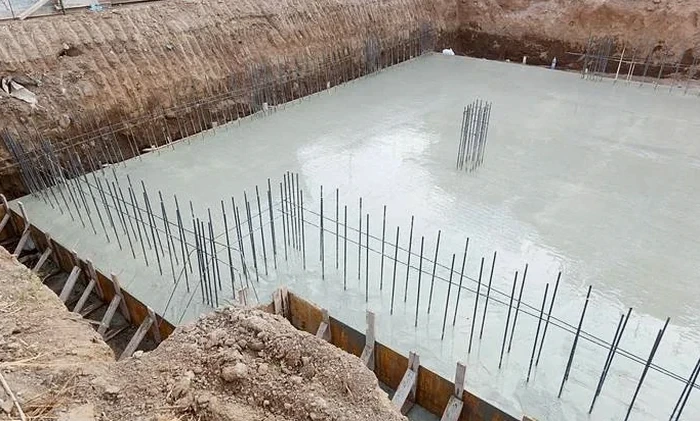
Applying NZS 3404 and the NZGS guidelines isn't just a compliance exercise in Whangarei—it's the practical starting point for any shallow foundation design that has to last. The layered basaltic remnants and softer alluvial pockets across the city create abrupt changes in bearing capacity over very short distances. What works logically on one lot might be inadequate three sections down. That's why we anchor every design in a clear understanding of how these local ground conditions interact with the structural load path. A well-executed series of test pits early in the investigation gives us the visual confirmation we need, allowing us to correlate lab data with what the ground actually looks like at formation level before the concrete goes in.
In Whangarei, the biggest risk to a shallow foundation isn't the total load—it's the differential movement where basalt-derived clay meets soft alluvium.
Local geotechnical context
One mistake we see repeatedly in Whangarei is treating the weathered basalt crust as a uniform, high-strength bearing layer without probing for the soft lenses trapped beneath it. A contractor clears the site, sees solid-looking red-brown clay, and proceeds with a generic strip footing detail that assumes 300 kPa across the board. Later, when the wet season raises the groundwater level, the softer underlayer consolidates unevenly and the slab exhibits cracking that no amount of surface remediation can fix. The cost of retrofitting under-slab drainage or underpinning sections of a footing dwarfs the investment in a proper shallow foundation design from the start. When the site falls within a liquefaction-prone zone near the river margins, ignoring this step means the foundation could be fundamentally incompatible with the ground improvement strategy required by the council.
Questions and answers
What does a shallow foundation design package typically cost for a residential build in Whangarei?
For a standard residential project, the shallow foundation design component usually falls between NZ$2,820 and NZ$4,640, depending on the complexity of the ground profile and the structural system. A site with uniform basalt clay requires less analytical effort than one straddling a transition zone between volcanic rock and soft alluvial silt, where differential settlement analysis becomes more involved.
How do Whangarei's soils affect the choice between a strip footing and a raft slab?
Where the basalt-derived clays are consistent across the building footprint, strip footings often provide the most economical solution. When we encounter the variable ground common near the Hātea River or reclaimed gullies, a stiffened raft slab helps bridge localised soft spots and reduces the risk of differential movement, making it a safer long-term choice even if the initial concrete volume is higher.
Do you need to do soil testing before designing a shallow foundation?
Yes, and in Whangarei it's non-negotiable. The rapid lateral variation between volcanic and alluvial deposits means two boreholes or test pits on the same section can reveal completely different bearing conditions. We rely on site-specific investigation data—not desktop assumptions—to calibrate the design parameters, because the cost of getting the ground model wrong is usually a structural crack that appears within the first two years.
What's the typical turnaround time for a shallow foundation design once the site investigation is complete?
Once we have the geotechnical investigation report and the architectural foundation plan, we typically deliver the design package within two to three weeks. Complex sites requiring iterative settlement modelling or liquefaction assessment under NZS 4203 may extend that by an additional week, but we keep the structural engineer and the builder in the loop at each stage to avoid hold-ups during the consent process.