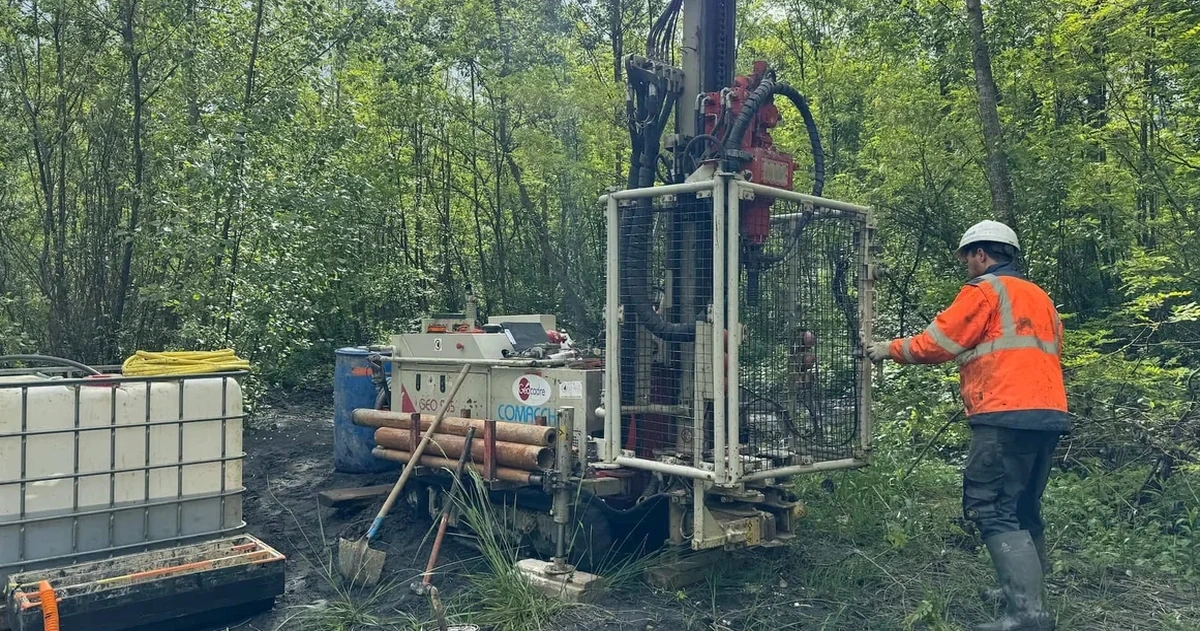
The subtropical humidity of the Whangārei basin creates a deceptive landscape where firm-looking volcanic ash layers often hide soft, compressible alluvium beneath. With a population exceeding 55,000 and a growing number of coastal and hillside developments, the region demands a rigorous approach to ground investigation. In our laboratory, we've found that the residual clay soils derived from weathered basalt around the Parihaka scoria cone behave entirely differently under load than the marine sediments near the Town Basin marina, which is why a generic desk study rarely captures the real risk. A properly scoped soil mechanics study—though we avoid linking to our own page—must integrate Atterberg limits with triaxial shear strength data to model how these soils will respond to both static building loads and the dynamic shaking common in Northland's moderate seismic zone. Complementing this with field data from an in-situ permeability test helps engineers design drainage that prevents pore-water pressure buildup during the region's intense winter rainfall events, which can exceed 200 mm in a single month.
In Whangarei's volcanic terrain, the gap between a competent-looking weathered basalt and a compressible halloysite clay is often only a meter, and that difference can define a foundation's long-term performance.
Local geotechnical context
The Whangārei District sits within a region where the 2010 Darfield earthquake sequence, though distant, prompted a major review of local seismic hazards. The basaltic lava flows that cap the hills are often underlain by much softer, weathered layers that can amplify ground shaking. The primary risk we quantify in our studies is the potential for cyclic softening in the saturated fine sands and low-plasticity silts found along the coastal fringes of Ruakākā and One Tree Point. When a client skips a detailed mechanical assessment, they remain blind to a potential bearing capacity failure where the factor of safety might drop below 1.0 under undrained seismic loading. Beyond the earthquake scenario, the swelling pressure of the halloysite-rich clays—a mineralogical quirk of Northland's subtropical weathering—can generate differential heave that cracks light residential slabs long after construction. Our consolidation data, interpreted alongside NZS 3604 and specific engineering design parameters, allows the structural engineer to specify a reinforced raft or a suspended floor system that isolates the structure from these volumetric changes.
Questions and answers
What is the typical cost of a comprehensive soil mechanics study for a residential section in Whangarei?
For a standard residential lot in the Whangarei area, a full soil mechanics study including a site investigation with boreholes, laboratory triaxial testing, and a detailed geotechnical report typically ranges from NZ$5.890 to NZ$8.720. The final investment depends on the number of test pits or boreholes required to satisfy NZS 3604 and the complexity of the underlying geology, such as whether the site is on the volcanic slopes of Parihaka or on the softer alluvial flats.
How do you account for the volcanic soils found under Whangarei in your laboratory testing?
The volcanic ash and basalt-derived soils of Whangarei often contain halloysite clay minerals, which can have a surprisingly high sensitivity to disturbance. We handle these samples with extreme care, using thin-walled Shelby tubes for extraction and preserving their natural water content to avoid remolding. Our triaxial testing specifically measures the peak and residual strengths to determine if the soil is strain-softening, a critical factor for slope stability on the hills around the city.
Can your soil mechanics study verify if a site in Whangarei has a liquefaction risk?
Yes, a key component of our study for sites near the coast or the Hātea River involves evaluating the liquefaction susceptibility of the fine sands and silts. We use the grain size distribution from our sieve and hydrometer tests combined with the fines content and plasticity index. These data points are plotted against the NZGS-MBIE liquefaction assessment curves to determine if the soil falls into a potentially liquefiable category, providing the engineers with the parameters needed for a quantitative seismic analysis.